

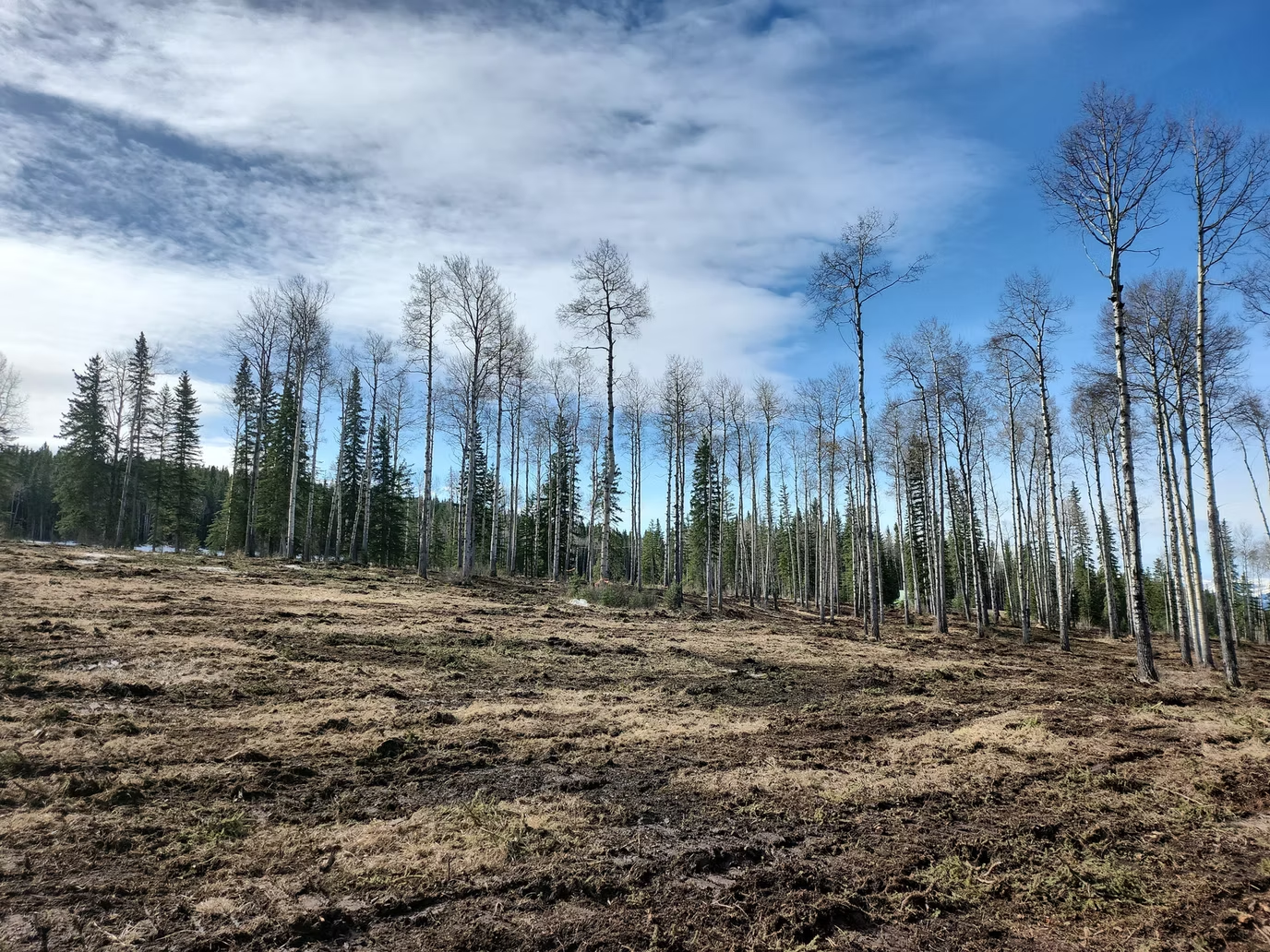
As wildfire seasons grow longer and more intense across Alberta, communities like the Town of Hinton are taking proactive steps to reduce risk and build resilience. At Cokel, we are proud to be working alongside the Town of Hinton to lead FireSmartTM initiatives that bring expert wildfire solutions directly into the heart of the community. With over 70 years of combined experience in wildfire management, Cokel is uniquely equipped to help municipalities assess risk, develop mitigation strategies, and implement practical, on-the-ground solutions. In Hinton, this means delivering a comprehensive suite of FireSmartTM services designed to reduce fuel loads, protect infrastructure, and educate the public on fire-safe practices. In August 2024, Cokel Forestry was contracted by the Town of Hinton to develop a Wildfire Preparedness Guide, design a new fireguard, enhance the existing fireguard built in 2009, and create a 10-Year Wildfire Mitigation Strategy. These efforts are part of a long-term vision to safeguard the town and its surrounding forested areas from the increasing threat of wildfires. A key component of this strategy is the fireguard—an essential FireSmartTM feature in communities at risk. Fireguards provide suppression crews with safe, defensible zones to combat approaching wildfires, while also preventing fires from spreading into the town or out into nearby wildlands. Through our spring mulching program, the Hinton fireguard has been revitalized, enhancing its effectiveness just in time for the 2025 fire season. The FireSmartTM Project in the Town of Hinton showcases the power of public-private collaboration. When municipal leadership joins forces with industry experts like Cokel, the results are more impactful, efficient, and sustainable. The town provides direction and community backing, while we bring agility, technical capacity, and field expertise to execute timely, effective solutions. At Cokel, we’re proud to bring our specialized knowledge to this important work. Together with the Town of Hinton, we’re not just protecting landscapes—we’re helping safeguard the lives, homes, and livelihoods of the people who live there.
Celebrating Ribbon Skirt Day in Canada: Honouring Culture, Strength, and Resilience
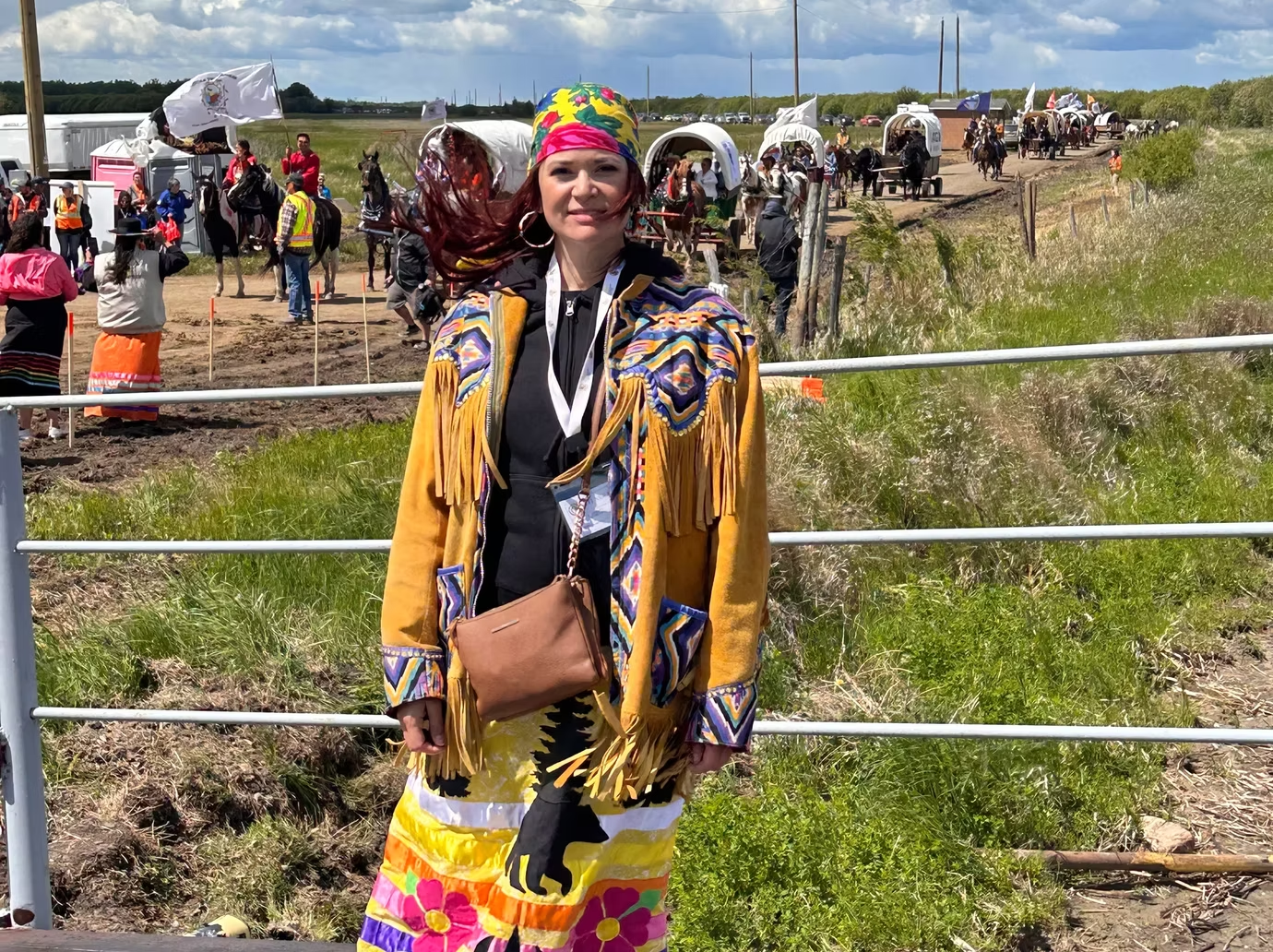
Ribbon Skirt Day, celebrated annually on January 4th, is a time to honour Indigenous women, their strength, and the rich cultural heritage embodied in the ribbon skirt. This day holds profound significance across Canada, symbolizing resilience, identity, and the intergenerational transmission of tradition. The ribbon skirt, a vibrant and deeply symbolic garment, tells stories of survival and adaptation. Its colourful ribbons are more than decorative; they carry messages of connection, community, and the personal journey of the person wearing it. For many Indigenous women, the ribbon skirt is a cherished cultural expression that connects them to their roots and honours their role as keepers of sacred knowledge. Leanna Willier, a coordinator of Cokel’s Indigenous Monitoring and Training program currently working on a Project, shares her personal reflections on the ribbon skirt: “My name is Leanna Willier, and I am from Sucker Creek First Nation within Treaty 8. The ribbon skirt to me represents a symbol of womanhood, culture, and strength. It is a reminder of my sacredness as a woman and the power and responsibility that come with such an honour. The ribbon skirt tells a story of our adaptation and survival as the first people of Turtle Island. It is an identifying piece that connects me to the earth and Grandmother moon. I like to wear my ribbon skirt when in the presence of drums, pipes, feathers, and other sacred items and always when attending ceremonies.” Ribbon Skirt Day, celebrated annually on January 4th, is a time to honour Indigenous women, their strength, and the rich cultural heritage embodied in the ribbon skirt. This day holds profound significance across Canada, symbolizing resilience, identity, and the intergenerational transmission of tradition. The ribbon skirt, a vibrant and deeply symbolic garment, tells stories of survival and adaptation. Its colourful ribbons are more than decorative; they carry messages of connection, community, and the personal journey of the person wearing it. For many Indigenous women, the ribbon skirt is a cherished cultural expression that connects them to their roots and honours their role as keepers of sacred knowledge. Leanna Willier, a coordinator of Cokel’s Indigenous Monitoring and Training program currently working on a Project, shares her personal reflections on the ribbon skirt: “My name is Leanna Willier, and I am from Sucker Creek First Nation within Treaty 8. The ribbon skirt to me represents a symbol of womanhood, culture, and strength. It is a reminder of my sacredness as a woman and the power and responsibility that come with such an honour. The ribbon skirt tells a story of our adaptation and survival as the first people of Turtle Island. It is an identifying piece that connects me to the earth and Grandmother moon. I like to wear my ribbon skirt when in the presence of drums, pipes, feathers, and other sacred items and always when attending ceremonies.”
Team Building with Purpose
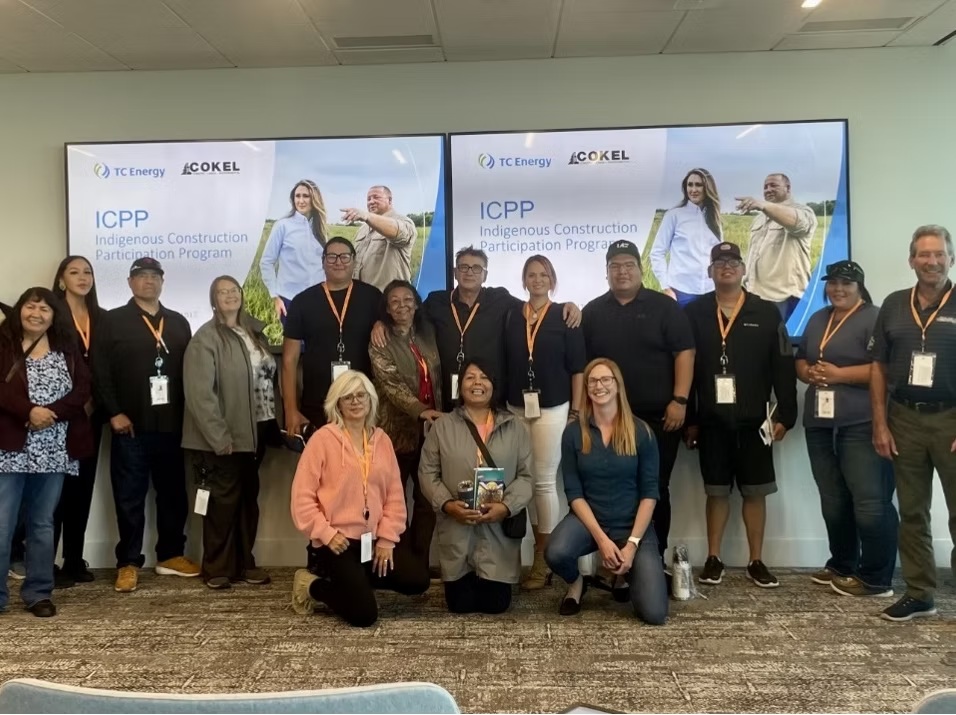
Five Indigenous Construction Participation Program (ICPP) teams gathered in downtown Calgary recently to tour the TC Energy corporate office and learn from past participants who have now become environmental inspectors. The day started with a tour of TC Energy’s control room, which included information on the control centers, their locations in North America, shutdowns, and fail-safes for potential issues in TC Energy’s network of pipelines and facilities. Next, the ICPP teams got to know each other, by presenting about themselves, and meet some of the support personnel from the TC Energy office over lunch. “It was a good way for the field and office teams to understand one another’s role and the value of the program,” stated Dina Sutherland, ICPP Program Manager. At the end of the day, two past ICPP participants, who have gone on to be environmental inspectors, told the group how they advanced and became environmental inspectors. “Our trip to the TC Energy office and being able to meet each of the other crews was an awesome experience. I have already learned so much throughout this season, but being able to hear from past ICPP participants about how they became environmental inspectors was definitely the highlight of the trip. I learned from them that you can never have enough education, that you will always be learning and the only one stopping you from succeeding is yourself,” explained Makayla Beck, Lundbreck ICPP participant from the Metis Nation of Alberta, Region 3. TC Energy’s ICPP facilitates Indigenous environmental monitoring with on-the-job training. Two objectives of the program are to provide opportunities for Indigenous community members to build practical understanding of NGTL’s construction activities and mitigation measures and facilitate Indigenous employment and training opportunities. “The Indigenous Construction Participation Program (ICPP) offers a unique opportunity to gain valuable knowledge and experience in pipeline construction. The program’s emphasis on environmental considerations and mitigation measures stood out. By combining my traditional knowledge with industry best practices, the ICPP can provide a truly enriching experience. Don’t just be a passenger, participate by taking notes, photos and asking questions to maximize your progress. The ICPP can be a stepping stone toward a brighter future by combining traditional knowledge with modern environmental practices during pipeline construction,” stated Gary Calliou, past ICPP Participant who is now an Environmental Inspector. “You need to be confident and determined to work hard, and to invest time and money into yourself. In years to come I hope to see one of you up here presenting on your experience of becoming an Environmental Inspector.” Leanna Willier, past ICPP participant who is now an Environmental Inspector.
ICPP Honours September 30th’s Truth and Reconciliation
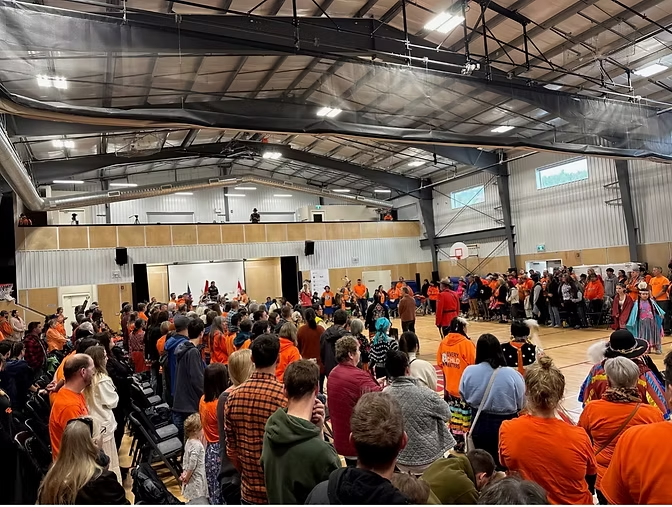
Truth and Reconciliation Day, or Orange Shirt Day, is about growing awareness for the people, families and communities impacted by the residential school system. “September 30th is a day to recognize what happened, put it in the past and start healing. It is encouraged that non-Indigenous people attend something like the powwow in a local First Nation community as this is a way to start the reconciliation process,” stated Bernadette, an Indigenous Construction Participation Program (ICPP) participant and a ?aq’am community member. Everyone can support reconciliation every day by learning, by caring and by taking action. The ICPP teams were urged to take time to honour September 30th and attend community events. One team travelled to the ?aq’am community to attend a powwow ceremony in the spirit of truth and reconciliation. “We observed the grand entry, which was quite impressive because of the attention to detail on all the regalia and the energy that goes into the drumming and dancing, even the young children got involved. It was definitely a highlight of my experiences as a coordinator,” explained Bill Phillips, ICPP Coordinator. 25 to 30 people came forward that were affected by residential schools and introduced themselves; Bernadette was one of those brave people. She attended the St Mary’s residential school until it shut it down in 1970. The team also stopped at a local fall fair where an ?aq’am community member, who lost their house in this summer’s forest fires, was selling Indian Tacos and fry bread. The coordinator tried his first Indian Taco and thought it was great! ?aq’am is a community that had seven houses burn from the summer forest fires. “We drove to the community on Saturday, after the powwow, and there were lots of areas (land and trees) burned in addition to the seven houses that were destroyed,” explained Bill. The other ICPP team attended a pipe offering officiated by an Elder of the Horn Society. Guest speakers shared their stories of residential schools and systemic racism. The team then attended a powwow and market. The day prior, the contractor hosted a lunch and had a video link to a presentation by Dr. Lana Potts, who told her story about being orphaned as a young woman with younger siblings and how it was like winning the lottery when she received a scholarship. She also talked about the racism and ridicule she faced even after receiving her medical practitioner’s license and the challenges of opening a medical clinic in her home nation of Piikani. She has held many positions, including three terms on the Indigenous Physicians Association of Canada board. It was an inspirational presentation. “We have to recognize and navigate the darkness before we can see the light.” Shayla Stonechild.
Team Building at Head Smashed in Buffalo Jump
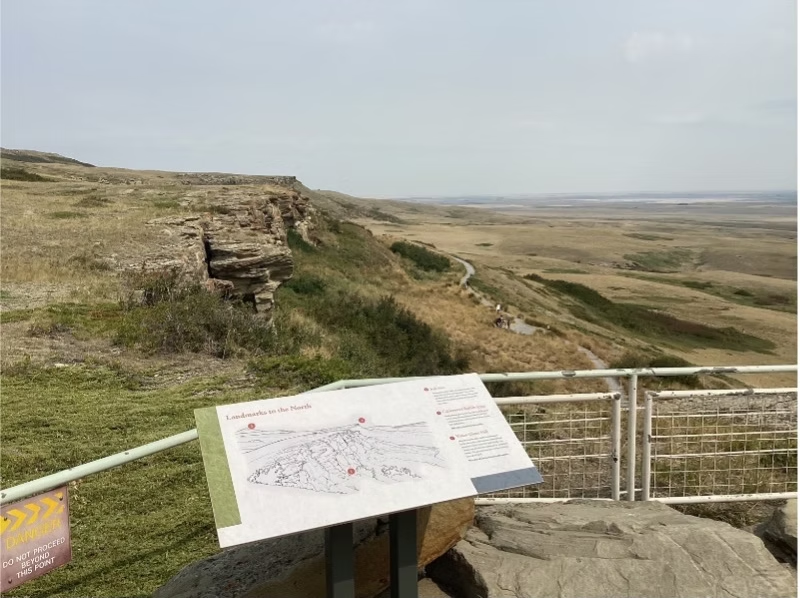
People are a company’s biggest asset and providing time for teams to get together and connect with one another is a key element to success. Recently, an ICPP crew visited the Head Smashed in Buffalo Jump Interpretive Centre near Fort Macleod, Alberta, one of the oldest and largest buffalo jump sites in North America, to spend time together while learning about key Indigenous history in the area. Head Smashed In was used for killing buffalo by generations of Indigenous people for approximately 6 000 years, which is a testament to both the ideal conditions for buffalo jumping and the skill of the hunters who learned to exploit the natural landscape and their understanding of bison behaviour despite the lack of complex weapons. “The 18 metre cliff facing east, opposite the prevailing winds, prevented bison from smelling the kill site. A large basin of grassland west of the cliff regularly attracted large herds of bison. Over a period of days they could be lured towards the precipice to their deaths. The large stretch of prairie immediately below the cliff provided a source of fresh water and shelter for camping, butchering and processing activities.”(Buffalo Tracks, p.3). The jump was last used 150 years ago when it was no longer needed due to the introduction of guns and horses as a means of hunting. Not only is Head Smashed In culturally important as a hunting ground but also because of the way its history has been verbally shared through storytelling by Indigenous elders. Storytelling for Indigenous cultures is a way to share history and instill knowledge. Storytellers are trained and are known as knowledge keepers. Head Smashed In is recognized by UNESCO (the United Nations Educational, Scientific, and Cultural Organization), which puts it in the same category of importance as Machu Picchu in Peru, the Taj Mahal in India, and the Pyramid fields of Egypt. Who knew Alberta had such rich history!
Lille Townsite Full of History
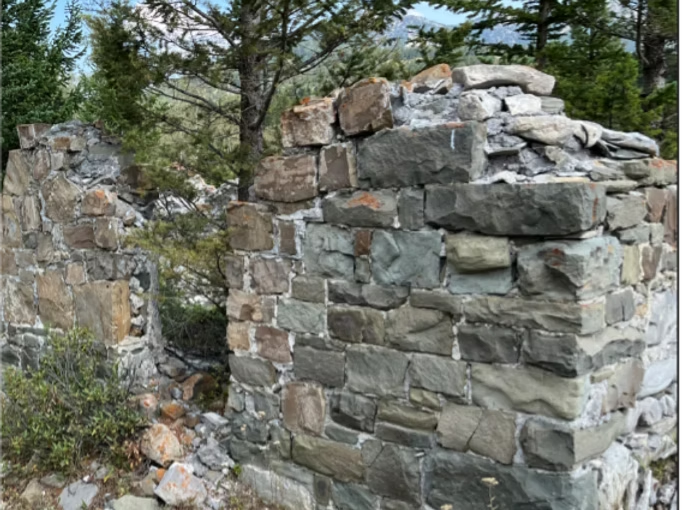
Two teams recently visited the historic Lille town site in the Crowsnest Pass to learn about its history and the early exploration of energy sources in Alberta. Storyboards are posted throughout the abandoned site and this way of learning parallels the importance of story to Indigenous Peoples. Indigenous peoples are known for their oral story telling; it is how they pass on their culture, language and ways of life. Stories are how they connect with their ancestors. While visiting the site, the team learned that the coal and coke industry exploded at the start of the twentieth century, creating a boom economy. The coal mining town of Lille, originally called French Camp, existed for about a decade from approximately 1901 to 1913. One French and one German prospector came to the area in hopes of finding gold, but instead opened coal seams along a river. A railway was required to be built to haul the coal from Lille, but unfortunately it was destroyed, just six weeks after being completed, during the Frank Slide of 1903; however, it was rebuilt and the town thrived. The community of Lille had a population of 400 by 1910, complete with a hotel and a growing business district. They even had a hockey team and a 15-bed hospital. Three mines produced almost a million tonnes of bituminous coal between 1901 and 1913. Unfortunately, by 1908 it was common knowledge that the mines were producing an inferior quality of coal with high ash content. This and an economic slow down in 1912 led to the demise of Lille, which was named after a city in Northern France, where the mining company’s head office was located. One-by-one families left and the buildings were left empty. Several structures, or remnants of what once was, still exist at the Lille site. One of the most impressive is the Bernard Coke Ovens, which was designed and prefabricated in Belgium; each brick was numbered and assembled in Lille. The railroads and buildings were all removed or demolished in the 1930’s, but slack piles (coal waste) can still be found nearby. They are easy to spot because they are so black compared to the surrounding mountains and hills. In the meadow, small depressions in the earth exist where once storage cellars underneath people’s houses existed. It is worth the incredible hike to appreciate and learn a little bit more about Alberta’s coal mining history.
Team and Culture Collide
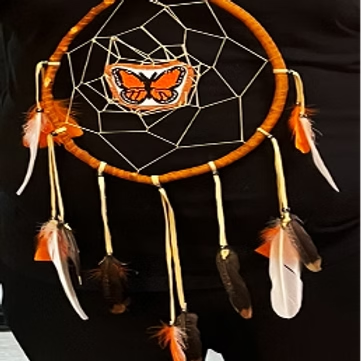
Going to work everyday can be a grind, but when you have a caring and supportive team, it makes a world of difference. Organizations have spent millions trying to figure out the secret sauce that makes a high functioning team tick and you know what it is; caring. On the Turner Valley / Longview crew, one participant demonstrated he cared by crafting and gifting a dream catcher for another participant’s newly born daughter (see photo). Dream catchers are a captivating tradition of Indigenous peoples that millions embrace. They are said to protect a person from bad dreams while letting the good dreams through. ‘The positive dreams would slip through the hole in the center of the dream catcher, and glide down the feathers to the sleeping person below. The negative dreams would get caught up in the web, and expire when the first rays of the sun struck them.’ (Dream Catcher History & Legend) The practice of gift giving has unique significance to the Indigenous culture; it demonstrates respect and appreciation. ‘Gifting is also sharing one’s resources to benefit and support others. Gifts are an intrinsic part of the sharing ethos of Indigenous people; sharing has always been a necessary aspect of survival.’ (TransCanada) Through gifting and sharing of cultural practices to show they care, the Turner Valley / Longview crew has figured out the perfect recipe of a high performing team. “Dream Catcher History & Legend.” Dream Catcher History & Legend | Dream-Catchers.org “Presents with a Purpose – The meaning of Indigenous Gift Giving.” Presents with a purpose – the meaning of Indigenous gift giving (tcenergy.com)
Tsuut’ina Powwow Days is Rich in Culture
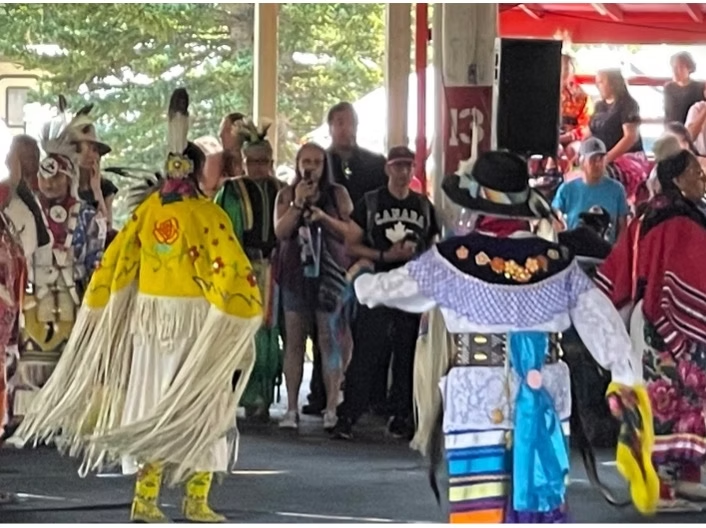
Guided by a participant from the Stoney Nakoda Nations (Bearspaw First Nation), an ICPP team experienced a day rich in culture while attending the annual Tsuut’ina Powwow Days in July. The event started in 1972 as a small gathering and focused on people getting together and honouring their ancestors. Key activities were healing circles, dancing and singing. Family is very important to Indigenous peoples and the tradition of the powwow continues. Families camp at the site to enjoy the annual gathering while participating in dancing and drumming competitions. The events are non-stop, with multiple drum groups, dances and Indigenous vendors selling a wide selection of traditional and non-traditional items and food. The dancers are judged on their regalia and dancing. The team was able to observe four different dance groups competing in the Men’s Buckskin, Women’s Traditional, Junior Traditional and Teens Chicken Dance. “The clothing worn by the dancers is intricate and stunning; beads, yarns, feathers and leather are all used,” explained a team member, “The colours are bright and the decorations and styles are deep with meaning”. The large headdress is worn by the elders and chiefs, while a head roach can be worn by the dancers and is made from porcupine hair and quills. Roughly 15 drum groups competed with up to 12 singers, singing in their native language, around each drum. “The singers drum and sing at the same time. The songs are intense and the drumming is full or energy. The down beat is played in the centre of the drum, with full arm swings that create a deep ‘boom,’ which echoes throughout the arbour,” stated a participant. This is an open Powwow and all members of the public are welcome. Many communities are involved outside of the Tsuut’ina nation, including non-Indigenous, so much that it is difficult to find a seat at times. The team encourages everyone to take their families to next year’s event, it will not disappoint.
Cokel’s IMT Program in Action: Supporting Pipeline Projects and Protecting the Land
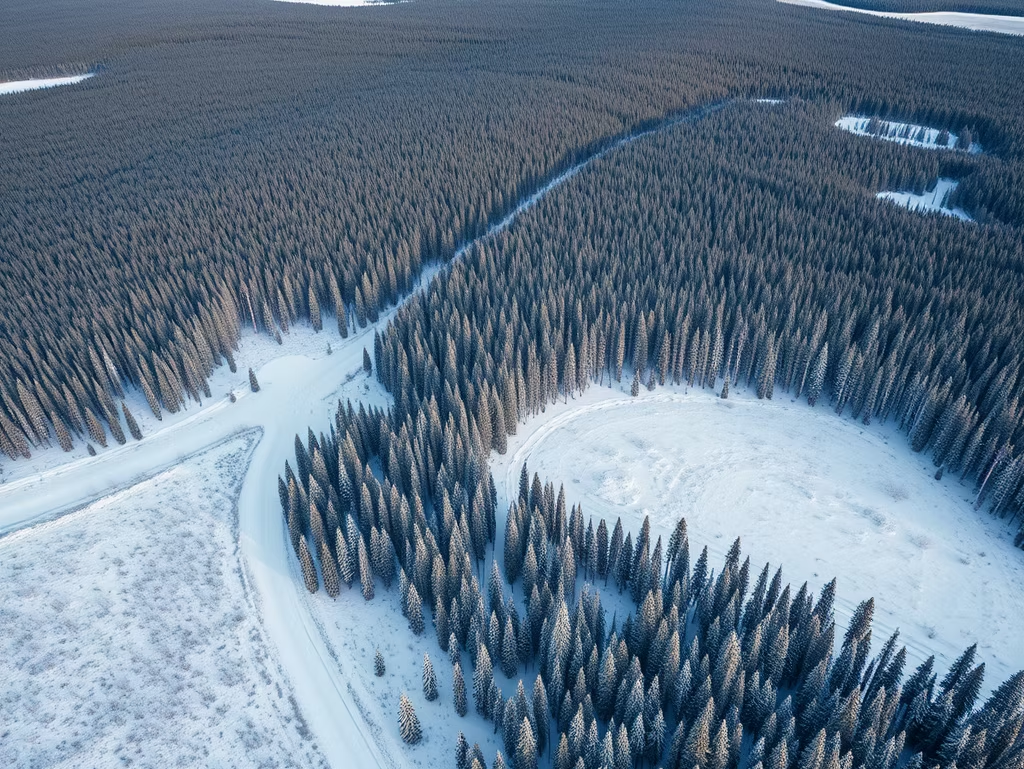
This winter, Cokel proudly supported two crews in Northern Alberta to support a major pipeline project through our Indigenous Monitoring and Training (IMT) Program. This marks another significant milestone in our mission to build stronger relationships between Indigenous communities and industry, while promoting understanding of environmental stewardship and regulatory compliance through on-the-job training. The IMT Program is more than a training initiative, —it connects community members to the projects and people working on or near their community, ensuring Indigenous voices are present and heard while building trust through transparency. IMT participants play a critical role by monitoring compliance with Environmental Protection Plans (EPPs), observing construction activities firsthand, reporting back to their communities and contributing their own knowledge and perspectives to safeguard the land. Why We’re Proud At Cokel, we’re proud of the meaningful work and relationships the IMT program creates, not because it meets regulatory requirements, but because it represents progress. It reflects our commitment in supporting Indigenous participation and development. Each project, we see our IMT participants grow in confidence and capacity—and their reflections tell the story best. “This program helps understand their process more and why they do what they do.” – Barbara Horseman, Horse Lake First Nation Barbara’s insight reflects the core purpose of the IMT program—building understanding. By witnessing construction practices firsthand, participants gain clarity on how environmental mitigations are planned and executed, which helps to build trust and collaboration between communities and industry. “I saw that they are doing their best to protect the environment by using the mitigations outlined in the Environmental Protection Plan.”– Justin Wanyandie Justin’s observation is a powerful affirmation of the work being done onsite and the importance of having Indigenous monitors verify that environmental commitments are being upheld and communicating it to their broader community. “What stands out for me is the care that goes into the environment and ensuring the activities stay within the construction footprint. All the personnel were friendly and clear in explaining what was happening on each site. I learned that it takes years and years of planning for a project to happen, with all the details of what should and should not happen detailed in the EPP, including mitigations. One of my biggest learnings is that I really liked that the equipment was all inspected so they were not transferring debris from one site to another. This program gave me an opportunity to see construction from start to finish. I was supported by Cokel personnel. Let’s leave the land better than how we found it.”– Ramona Savard, KLFN Ramona’s experience is what our IMT program is all about—education, empowerment, and care for the land. Her journey from the beginning to the end of the project demonstrates the real impact of having community members involved and supported every step of the way. Moving Forward Together The IMT program doesn’t just fulfill obligations—it’s part of our commitment to reconciliation and shared responsibility. Every project is an opportunity to learn, grow, and build better pathways between communities and industry. We are incredibly proud of our team this winter and deeply grateful for the knowledge, commitment, and care each IMT participant brought to the field.